Servant King

Christians in Pakistan

I remember one day in my early twenties sweeping a floor in a soup kitchen for the umpteenth time and using their hand brush while on my knees to get EVERYTHING off the floor and into the wastebasket when I thought I would eventually graduate from service. Ya know, helping people and serving them. Like the cleaning toilets and taking out the trash kind of stuff.

I remember having lofty thoughts of leading something or speaking somewhere or doing something IMPORTANT. Something that would impact the world and make a mark. One day. One day I would graduate from service.

I can tell you now, a decade later — I will never graduate from service. If I will one day lead others, I will lead them into service. If I speak, I will speak about loving God, themselves, and others well. There has been a change but the change has been within me; I no longer hold a desire to move on to something else.

I still sweep floors, clean toilets, and take out the trash. I still wash others dishes, underwear, and throw away their leftovers. I still wipe that rag along baseboard so dust doesn’t make a home, and I scrub tiles in the kitchen so residue doesn’t stay for long.
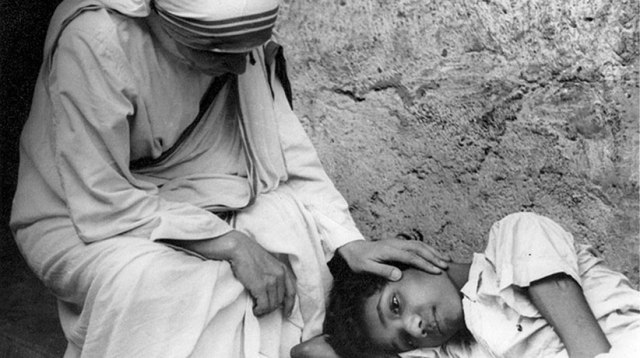
Jesus never graduated from service, rather he graduated his disciples into service. His last night with them was spent on his knees getting his hands in their dirt and washing their feet. He didn’t have to. It wasn’t because they were worthy of the act. He did it because it revealed the likeness and nature of his father.

He may not have specifically been inviting them into the life of Cinderella, but in part, he was. Every day some of the people I am most impressed with in the world are not on television shows or the radio; they are people cleaning up the bathroom mistake of their elderly father or mother who didn’t quite make it in their feebleness to the toilet. They are the mothers and fathers who faithfully love an adolescent who hates them back and is being self-destructive. They are the beautiful families that serve siblings or spouses who are handicapped and will never live independently from their care or even have the mind or ability enough to say “Thank you.”

Not only does God serve the needy and take care of the poor, he invites us to something even harder. Welcome to not necessarily graduation from service, but maybe the next lesson within it: “27 “But to you who are listening I say: Love your enemies, do good to those who hate you, 28 bless those who curse you, pray for those who mistreat you. […] 31 Do to others as you would have them do to you. 32 “If you love those who love you, what credit is that to you? Even sinners love those who love them. 33 And if you do good to those who are good to you, what credit is that to you? Even sinners do that. […] 35 But love your enemies, do good to them, […] Then your reward will be great, and you will be children of the Most High, because he is kind to the ungrateful and wicked. 36 Be merciful, just as your Father is merciful.” Lk 6

God never graduated from service. While he was on his knees in front of his friends he was king of the Jews with an unseen crown representing all authority on his head. Jesus was himself called a servant of God, executing his father’s will as his own. His admonishment for greatness was in fact this very thing. “Jesus called the twelve and said, “Anyone who wants to be first must be the very last, and the servant of all.” Mk 9:35

My challenge is to not resent the tasks at hand before you; the tasks for which you don’t get paid, the tasks for which no one notices, the tasks for which you won’t get any online attention. And we can all be leaders, but the manner in which we lead says more than our words do. After all, its ultimately him we can do these things and live this life for. It’s him we say thank you to as we exhale our breath, or gaze upon a loved one. It’s him who sees.


0513motherteresahero

Update on the Current Christian Iraqi Refugee Crisis in the Middle East

We arrived in Jordan one year ago to date.   Nothing has changed during that time for the course of tens of thousands of Iraqi refugees still stuck here in Jordan.   We have witnessed 25,000 Muslim Syrian refugees leave Jordan and go to Canada in the first three months of 2016.   I can count on my hands the number of Iraqi Christian refugees I have seen leave during the entire year.   When we first arrived in June of 2015, these refugees were distressed and seemingly without hope.  Now a year later they are even more desperate, emotionally less stable and still seemingly without hope.

Months ago, some families were told they were welcome with open arms only to have the world turn their face away after the shocking Paris attacks.  When people see the faces of Iraqi Christians refugees, they are clumped together with the faces of terrorist extremists, whether intentionally or unintentionally so.

Backstory
OYAZIDIS_g1

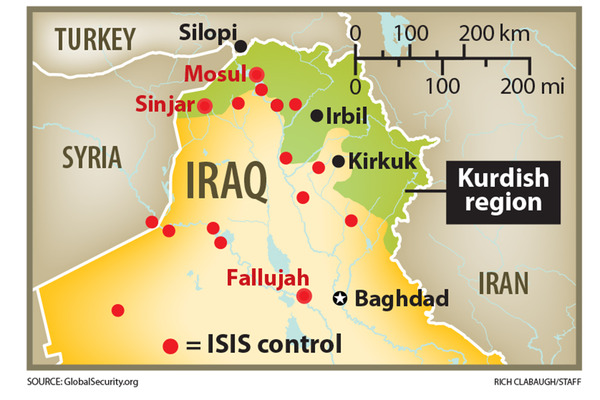
For more than hundreds of years Christians have settled in the area of the Nineveh plains, otherwise known as Mosul.  They speak Aramaic, the language of Jesus.  Additional Christians resettled here ten years ago as they fled Baghdad and the war that began to tare that city to shreds.  Mosul was defended by the Kurdish army otherwise known as the Peshmerga.  In the dark of night in June of 2014, the church bells rang through the city.  The Peshmerga had fled and ISIS was coming and would be in the city in three hours.  Thousands of families grabbed what they could in their hands and fled; some in cars, others on foot with children in the darkness for hours.  They all had one destination: Irbil, Kurdish territory.

Today

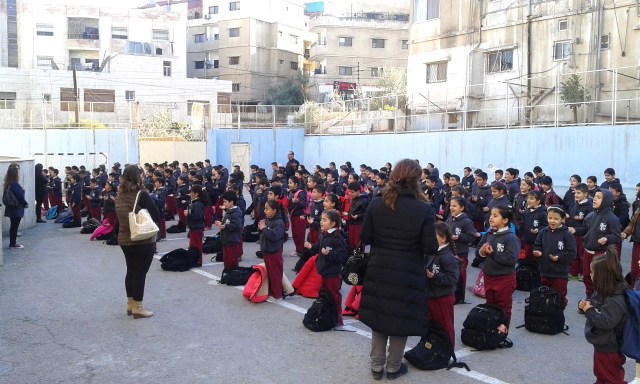
That was the terrible day that began the displacement of thousands of Christians in the Middle East.  Still they are without resettlement or any real hope of it.  In Jordan there is no feasibility for staying, there is no possibility even for the consideration of it.  The Jordanian government has given them five years tops for transitioning through to other countries.  In the meantime, these families cannot work, drive cars, or earn a living here, etc.  Live is stressful and different when a family has no intention of staying.  You don’t build relationships, you don’t seek to identify with the people, don’t attend school; you don’t plant roots.  Some families are still afraid to leave their homes.
20160106_151315

People in the West may think Jordan and Iraq are neighbors so at least it still is the same culture, but this couldn’t be farther from the truth.  In Jordan, the people speak a different language, eat entirely different foods, have a different religion, history and traditions.  The same goes for the northern Iraqi city of Irbil where there are thousands of refugees—now called IDPs, or internally displaced people are housed in camps.  To the West, Kurdistan is still Iraq.  In reality, Kurdistan is distinctly not Arab.  Kurdistan is Kurdish.  They exclusively speak the Kurdish language, eat Kurdish food, and live Kurdish.  If you are Arab, you are the what threatens their way of life, and here too, the Assyrian Christians have been lumped into the Arab threat.
FullSizeRender

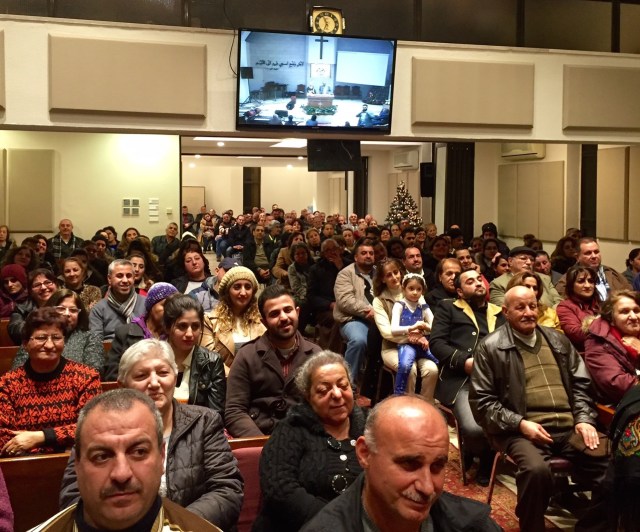
Here in Jordan, even now, new families are coming over every week from Irbil.  At first, my husband and I thought it was because they heard of a few families finally getting to leave, but after doing research we learned it is actually because the families that had fled to Irbil were staying there in the hopes that their lost land and homes would be one day be recaptured back from ISIS, delivering them from the threat of death—literally.  It seems they have now reached the end of their hope and are finally saying goodbye forever.

Once arriving in Jordan, they are entering a country saturated with refugees to overflowing.  In addition to the Iraqi’s mainly around the capital city of Amman, there are over one million refugees from Syria in the north.  No Iraqi’s are in camps here, they are all Syrian… and Palestinian. The Palestinian refugees that are in camps are still there, three generations later, from the displacement of what people here call the occupation their land by Israel.  (If you are traveling to Israel, you don’t tell people you are, you say you are going to Palestine, because here, the nation of Israel does not exist.)  Fortunately, recently there have been 85,000 work permits granted to Syrian refugees in efforts of integration and business regulation in the north by the Jordanian government.  Jordan is and has been a place of peace and consolation to the most dire of victims in this Middle Eastern chaos.
image1

Today we sat before an Iraqi refugee man nearly in tears saying, “I am responsible for my family, what am I to do?”  Yes, Joel and I work with Relief for these families, but money alone can not solve the problems these families have spread before them.  Even with clinic bills paid for, even with children in schooling we provide, even with a roof over their head, despair lingers.

They are not home, they have no family here, all their degrees and training in education in Iraq have become invalid requiring them to begin from square one wherever they go at any age (we know a man his first year into his practice as a doctor and one young woman who was due to graduate the week of fleeing), all the heavily regulated process towards marriage for anyone stops as grooms no longer have anything to offer a bride, and wherever a family may eventually end up they don’t know the language, culture or way of life, which are all very different.   Any money these families had in banks, the savings they had, the buildings, businesses, the cars, the land, farms, the places of all of their lifelong memories—gone.   This is the unseen effect of war, wherever it happens, whenever it happens.  Life stops. Unfortunately, the countries choosing war as a solution are often less familiar with the long-term effects on their own soil.
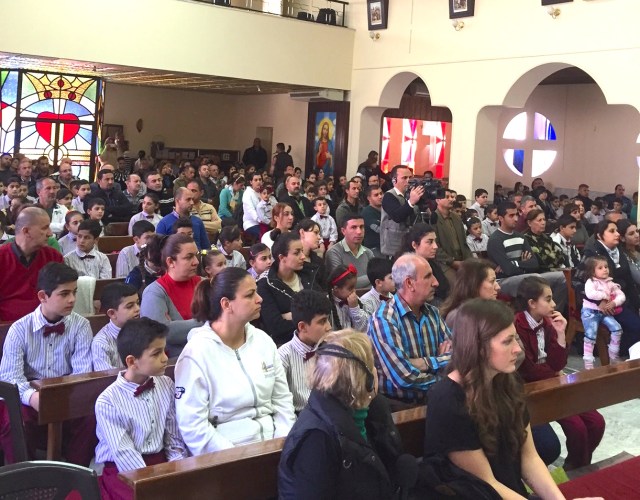
image4

After two years, the increase of stress and anxiety compounded by the lack of outlet for doing anything, going anywhere, any day of the week except waiting has caused depression to set in for some.  Families try to sleep through the day as much as possible for there is nothing, and no one for them to wake up for.  Don’t get me wrong, we are doing good things here; providing relief in the very middle of this crisis.  Patients are being seen for free, medical procedures are being helped with, languages are being learned, children are going to school, food is being distributed, and rent assistance is being given—all of those things are wonderful, critical, and important, but even with this they cannot stay, and the question in the back of everyone’s mind is, “Where can we call home?”

A Life Worth Living

imageIt has been almost six months since we decided to move to the Middle East. Many have asked of how we ended up living and being involved in one of the most “difficult” and “hardest” regions on the planet. The simple answer is that it was all His idea. Both my wife and I have felt that our lives haven’t been our own for a long time. When you have this deep conviction it is easier saying yes. Our no has been Crucified with Him. We get people praising us for living what seems like selfless lives. The honest reality is that we are doing what makes us come alive. He has orchestrated our steps and has led us down the road of Love.
We have had the privilege of working with His persecuted Body. Our days and nights consist of hearing people’s journey of Faith. They have had loved ones killed and everything they have worked for destroyed all because of their unbreakable conviction of not bending their knees to fear. I honestly can say that  I complain a lot less since I have been here. In the face of so much loss and pain what can I complain about??? Our brothers and sisters have lost everything but the ability to love. The way they have welcomed us to their homes and families is truly humbling.

If your asking yourself what can you do to help or how can I make a difference  I say to you is that you CAN love. You can love fearlessly and fully. Start with those around you. Do not let yourself be filled or swayed with fear by the Media and ask your God what He thinks about the Refugees. Ask Him how He sees them and go from there.    -Joel


A Word of Encouragement to Refugees

header_cover
          As I sit here on the second day of the week long festival of shelters I can’t sit here and recount God’s instruction without recognizing the parallel that so many of you are living in today. When God delivered the children of Jacob out from under the slavery of Pharaoh, he led them to a desert. He didn’t take them to the Mediterranean, or the Red Sea. They didn’t camp on tropical waters reclining with their feet up with God. He meant business with their hearts, he wanted relationship.
          And in their new year with him, there’s this festival he wants them to celebrate before they’ve really ever had the experience of the next forty years; originally they were only going to be in the desert for something like eight days until their journey brought them to the promised land. During this time, in this place, God was interested in one thing: worship. He wanted not their riches, or their children, or their wives, or their land; he was after their hearts.
Rwandan_refugee_camp_in_east_Zaire
          We all know how the story plays out. God sent these new displaced people, that had suffered great persecution and oppression, and God’s next plan for them was to stare new, unknown enemies in the face–and with God on their side–overcome them. He wanted to give them so much more than they had ever hoped for in Egypt.
          During slavery their only hope was freedom, but when they were given that, what was next for them? God wanted to show them his ways, introduce himself to a nation, speak with them, be their strong tower, be their king, and show himself near on their behalf. Ultimately God wanted to show them through his love, that he was worthy of theirs.
          They didn’t believe he was that good and they feared this new unknown land, and these new unknown enemies. They couldn’t see the goodness awaiting them past all the fears that stood in their way. And so they continued in tents. A new generation grew up as a people who were tied to God more than land, a people who didn’t find their strength in the size of their homes and estates, a people who were transient, a people who God was raising up to be tied to Him more than anything else.
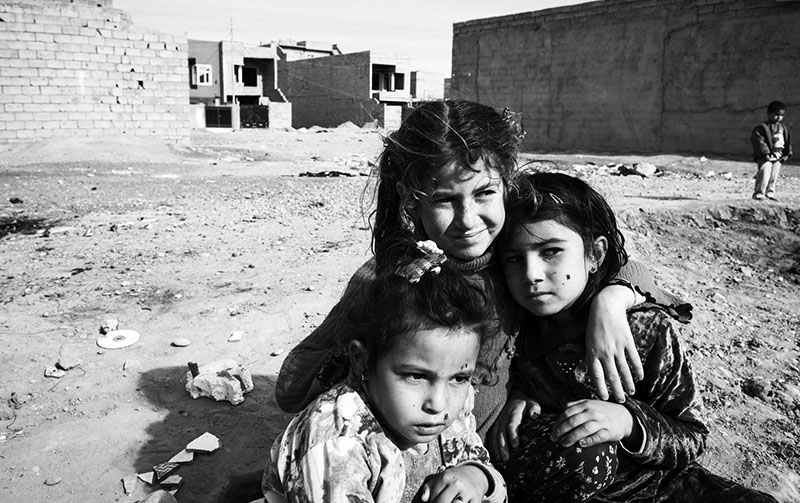
          Right now I look into faces of children refugees who have lost their toys, their bedrooms, their transportation, their towns, everything that was familiar to them. They are encountering unfamiliar languages, unfamiliar people, and enduring unanswered questions. Where are we going to live? Where is home? Who are we without money? Without jobs? These are all very scary prospects; especially for well-meaning adults and loving parents.
An_Aerial_View_of_the_Za'atri_Refugee_Camp
          But inside, despite all the ciaos I see around me in the lives I people, I carry hope. As we celebrate the second day of a week of God commanding people to live in tents, he is saying, “Remember.” “Remember this road I walked with you, remember this place of your complete dependency upon me. Remember when I led you apart from you knowing where you were going. Remember when I fed you supernaturally everyday by my own hand. Remember when you weren’t tied to a land. Remember when you were mine, and I was yours.”
          Some of you, thousands of you, not by choice know all too well the feeling of when God led his people, by his wisdom and foresight, into a desolate place, into a land where they could depend on nothing by their own hands for survival. There is a reality to God and a vastness to him that many never see or experience because they never venture further than the control of their own two hands, but it is here you have been forced, and it is here you will find him. This week as God has called people to remember when he dwelt among his people in tents; I will remember him now as He is dwelling among you.